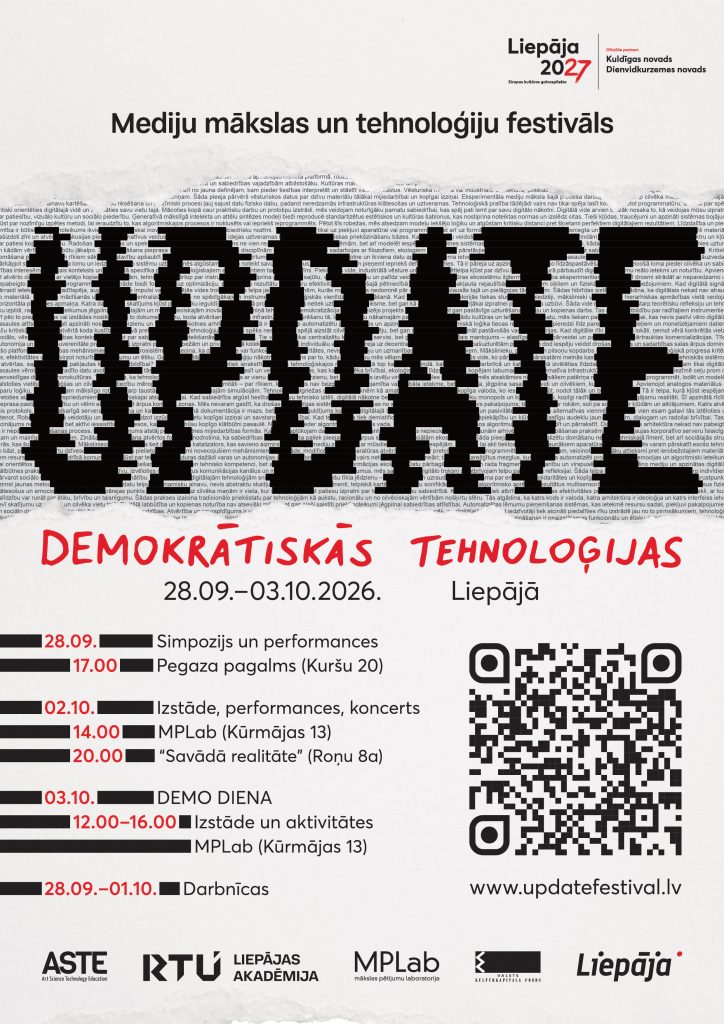
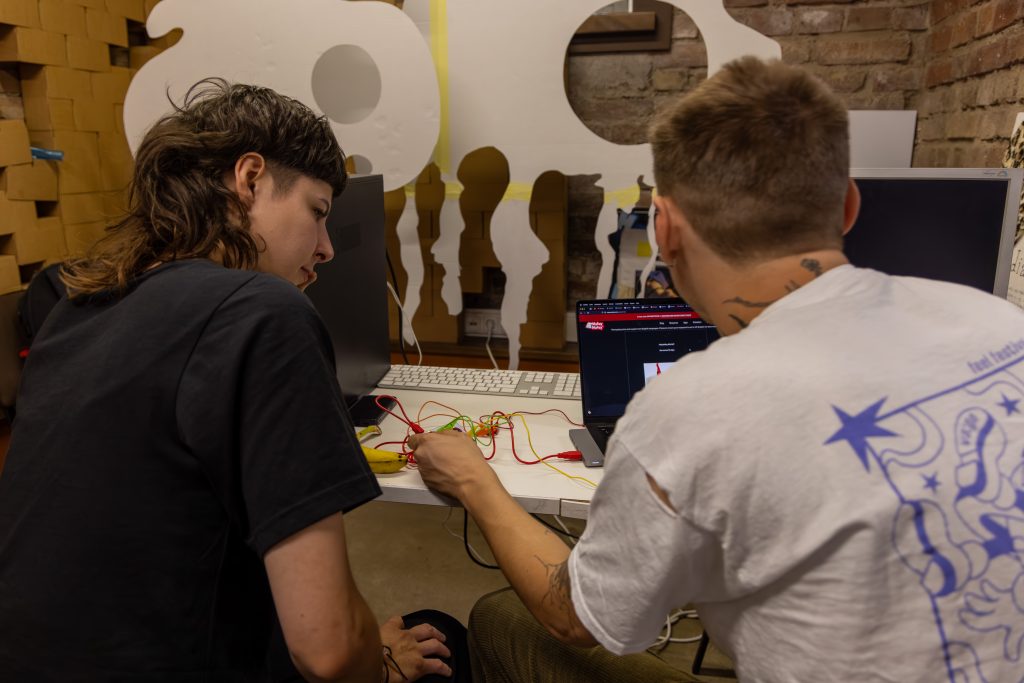
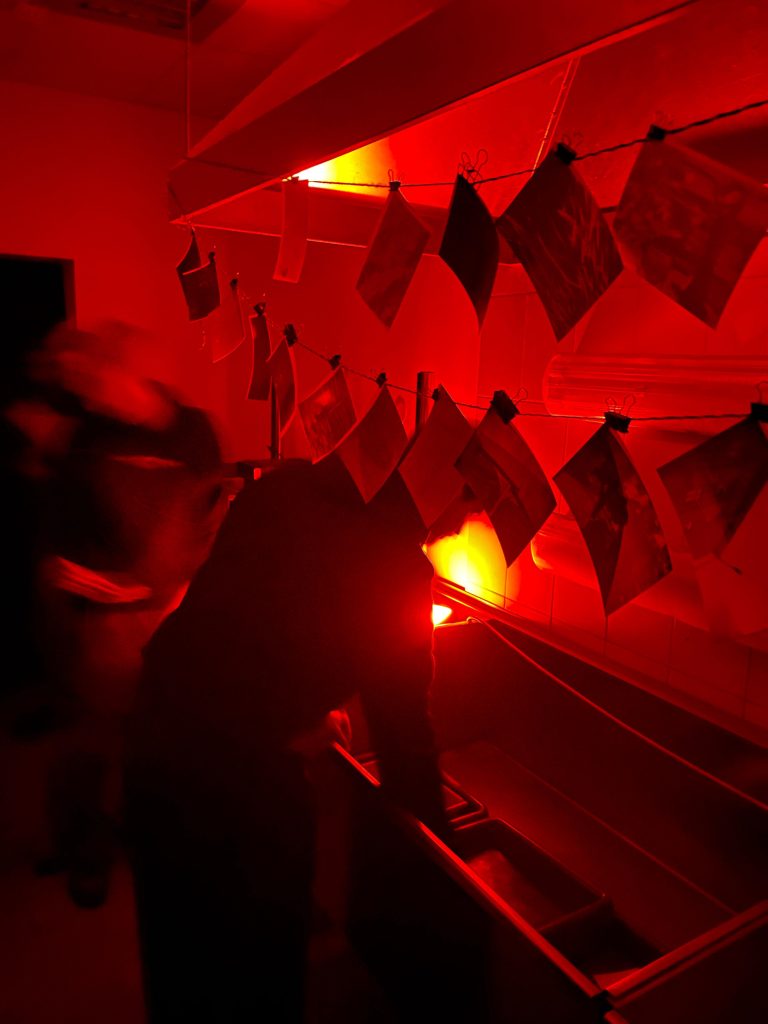
From September 28 to October 3, the media arts and technology festival “UPDATE: Democratic Technologies” will take place in Liepāja as part of the “Liepāja – European Capital of Culture 2027” programme. The festival will bring together artists, designers, engineers, researchers, and students from across Europe to explore through creative practice how technology impacts society and how it can be made more accessible, transparent, and inclusive.
This year, the festival focuses on the question of technological neutrality: technologies shape how we communicate, learn, and govern, while simultaneously serving as instruments of power consolidation or social inclusion. Throughout the week, the festival will host hands-on workshops, expert masterclasses, a symposium, and an exhibition.
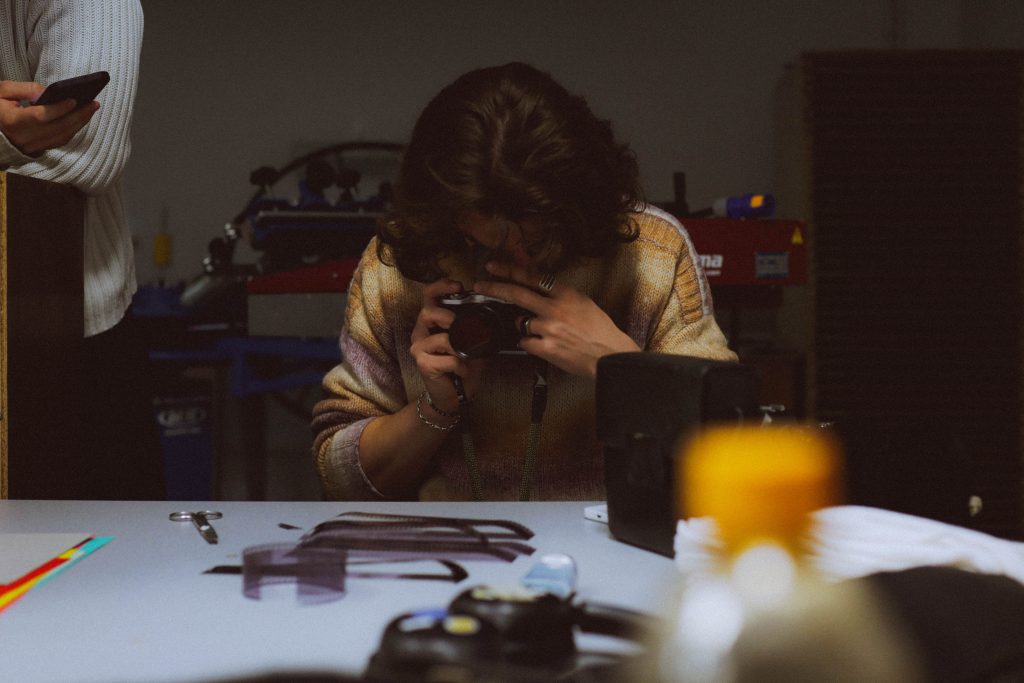
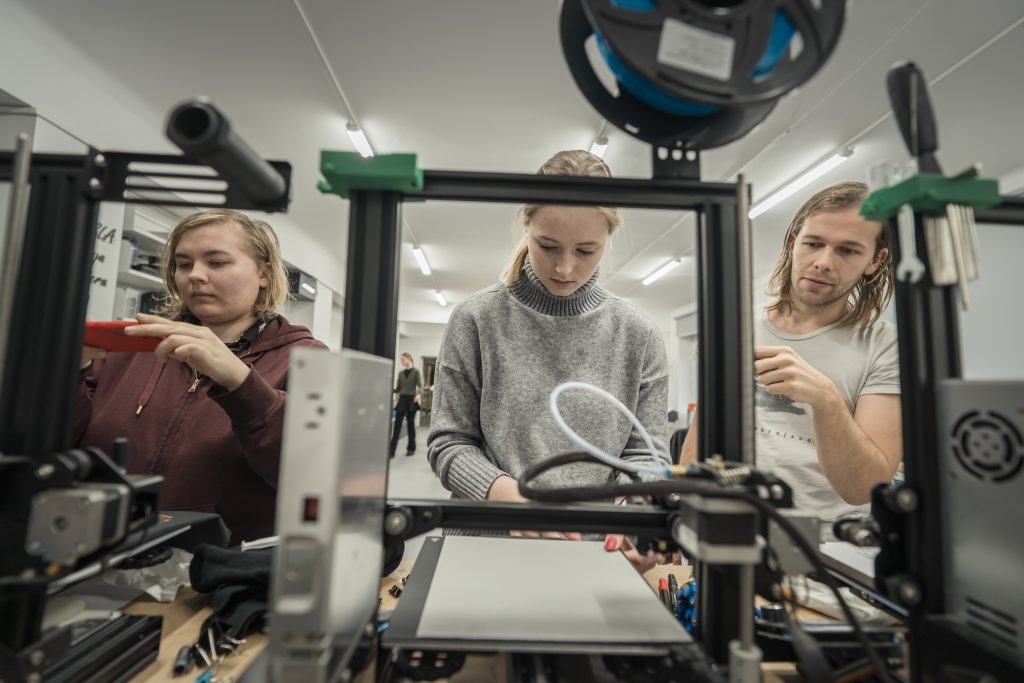
During the festival week, participants will work in intensive interdisciplinary workshops and masterclasses led by local and international experts. The creative processes will explore and apply virtual, augmented, and extended reality (VR/AR/XR), 3D scanning and photogrammetry for cultural heritage preservation, motion capture suits, interactive data interfaces, and soundscapes, as well as bio-art using bacteria and plants in interactive installations.
Events Open to the Public
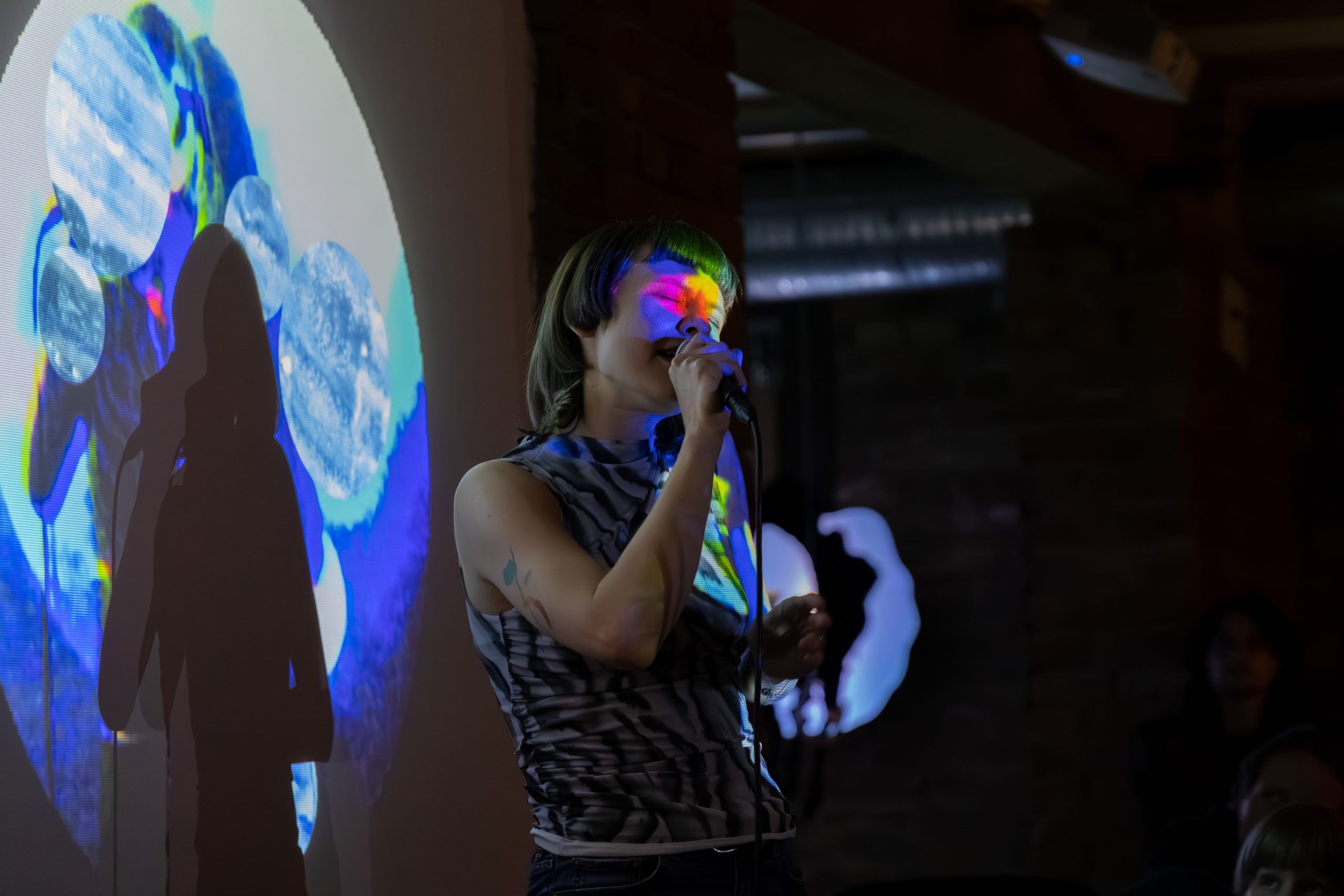
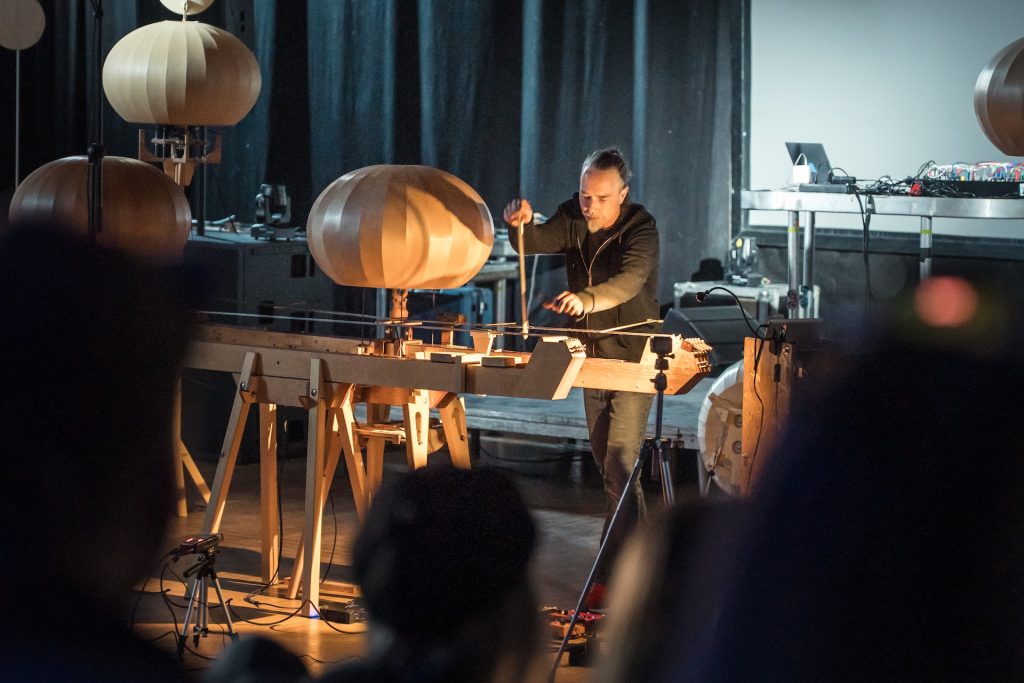
Monday, September 28, at 17:00 at Pegaza Pagalms (Kuršu street 20) – Festival opening featuring an artist and researcher symposium alongside sound art performances. Special guest: sound artist Felicity Mangan (Germany), who creates sensory vibration performances accessible also to audiences with hearing impairments.
Friday, October 2, at 14:00 at the RTU Liepāja Academy Art Research Lab (MPLab, Kūrmājas pr. 13, basement, entrance from the back) – Public presentations of festival workshop outcomes and prototypes.
Friday, October 2, at 20:00 at the digital culture centre “Savādā realitāte” (Roņu iela 8a) – Concert and performances. Special guests: Latvian experimental electronic music producer and sound artist EIII and Estonian sound artist Sander Saarmets.
Saturday, October 3, from 12:00 to 16:00 at MPLab – “Demo Day,” where visitors can explore an exhibition of workshop results and take part in creative and tech activities led by local and international artists. Open to everyone – kids, young people, and anyone curious about technology. Free entry, no registration needed.
The media arts and technology festival UPDATE is implemented as part of the “Liepāja – European Capital of Culture 2027” programme, with funding provided by the Ministry of Culture of the Republic of Latvia, the Liepāja City Municipality, South Kurzeme Municipality, and Kuldīga Municipality. The festival is organised by the Liepāja media artists’ association ASTE. Art, Science, Technology, Education (https://aste.gallery) and the RTU Liepāja Academy.
The “Liepāja – European Capital of Culture 2027” project is delivered by the foundation “Liepāja 2027 Foundation”, Liepāja City Municipality, and official partners – South Kurzeme Municipality and Kuldīga Municipality. Co-financed by the Ministry of Culture. The “Liepāja 2027” programme is supported by general partner for environmental education and sustainability AS “CleanR Grupa”, general partner for air mobility and international communication AS “Air Baltic Corporation”, legal partner SIA “Sorainen ZAB”, ground mobility partner SIA “Lux Express Latvia”, and maritime mobility and international communication partner SIA “Stena Line”. Media partners: VSIA “Latvijas Sabiedriskais medijs”, SIA “Žurnāls Santa”, SIA “Tvnet grupa”, AS “Kurzemes Radio”.
ASTE’s activities are supported by the State Culture Capital Foundation (VKKF) and the Liepāja Culture Department.
More information: https://www.updatefestival.lv/
Contacts: Maija Demitere (maija.demitere@rtu.lv, +371 29948430)
As part of “Liepaja – European Capital of Culture 2027”, an open call has been announced for public artworks and artistic interventions that through public engagement and listening, would respond to and reflect on wind, climate and environmental fluctuations. The project “Atmospheric Waves” is looking for original concepts and ideas for sound artworks that would respond to wind and climate conditions in Liepaja, on the West Coast of Latvia. The competition is open for applications until September 4, 2026.
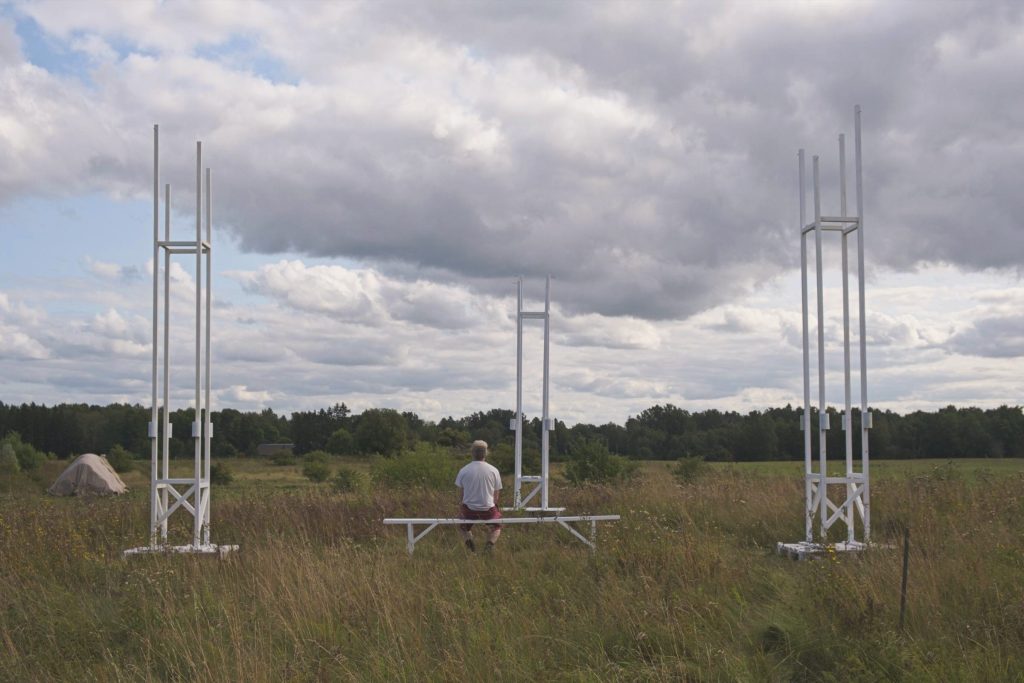
Photo by: John Grzinich, title: Wind harp installation “Powerless Flight”
The project “Atmospheric Waves” is dedicated to exploring the diverse aspects of wind, using sound art in its most diverse manifestations, public engagement and listening culture. Liepaja with its distinct seaside climate will be an ideal place for a dialogue between art, science and society. The “Atmospheric Waves” festival will take place from May 12 – 16, 2027 and the program of the festival includes the opening of an international exhibition and presentations of artworks, workshops, sound walks, as well as an international symposium on wind, waves and the Anthropocene, organized by CENSE (Central European Sound Ecology Network).
Through the international open call for the “Atmospheric Waves” festival five artists will be selected, whose creative practice involves sound art, natural data representation, and environmental object creation, and who are ready to participate in the international symposium, exhibition, and residency – in Liepaja and Laidi – in April and May 2027 .
An exhibition of works selected in the competition and developed within the project will be on display at the project’s final exhibition in the urban environment of Liepaja from May 15 to November 30, 2027.
We invite sound artists, sculptors, architects, designers, visual and media artists, as well as others whose work encompasses the fields of art, science, climate and environmental research, activism and public awareness and their intersections. Applications are open to artists from all over the world, but artists are responsible for their own visas and other necessary travel documents. Submitted projects must clearly reflect the main themes of the “Atmospheric Waves” project. Whether this is done through aeolian effects or sonification of Liepaja’s wind and climate conditions, we want to promote listening as a way to learn and explore the local climate.
“Atmospheric Waves” aims to encompass the diversity of artistic approaches that have influenced the broad concept of “sound art” in recent decades. This includes common interfaces with the fields of new media art, sound research, new music, sculpture, architecture and design. Technological developments, such as low-power computing, remote sensing and data monitoring, have also expanded the potential connections between artistic practices and climate and natural sciences. In addition, the fields of “sensory studies” are expanding in the humanities and social sciences, which continue to ask important questions about how we interact with the environment around us.
The application is open to ideas and collaborations with art projects from a wide range of fields that express the main themes of the exhibition “Atmospheric Waves” through creative and artistic means of expression. It is desirable that the artwork application includes one of the following elements: aeolian sculpture, environmentally responsive installation, sound sculpture, guided sound walk, listening score, data sonification, remote sensing, wind energy, social intervention and/or architectural intervention.
The selected artists will receive a fee of EUR 1,500, while the development budget allocated for one artwork is EUR 3,500. In addition, accommodation is paid for during the artists’ residency at the Laidi Manor Residence, which is located approximately 70 km from Liepaja.
The artworks will be placed on the territory of the former fishing collective farm “Kursa”, including the territory surrounding the recently opened club. https://maps.app.goo.gl/wWFoFLww9LH7hvKf7
For questions about various opportunities for developing work and working on-site during the residency, as well as other conditions and additional information, please write to krista@aste.gallery
The festival “Atmospheric Waves” is organized by the association “ASTE. Art, Science, Technology, Education” in collaboration with artist and curator Džonas Grziničs . It has been developed in partnership with “MoKS” and with the financial support of the “Nobidinājums Liepaja 2027” foundation . The project is implemented within the framework of the “Liepaja 2027” program, using the funding allocated by the Ministry of Culture, Liepaja City, Dienvidkurzeme and Kuldīga regions, and the State Cultural Capital Fund. The “Liepaja 2027” program is supported by the main partner in the field of environmental education and sustainability AS “CleanR Grupa”, the main partner in the field of mobility and international communication AS “airBaltic Corporation”, the partner in legal matters SIA “Sorainen ZAB”, the land mobility partner SIA “Lux Express Latvia”. Informative – VSIA “Latvijas Sabiedriskais medijs”, AS “KURZEMES RADIO”.
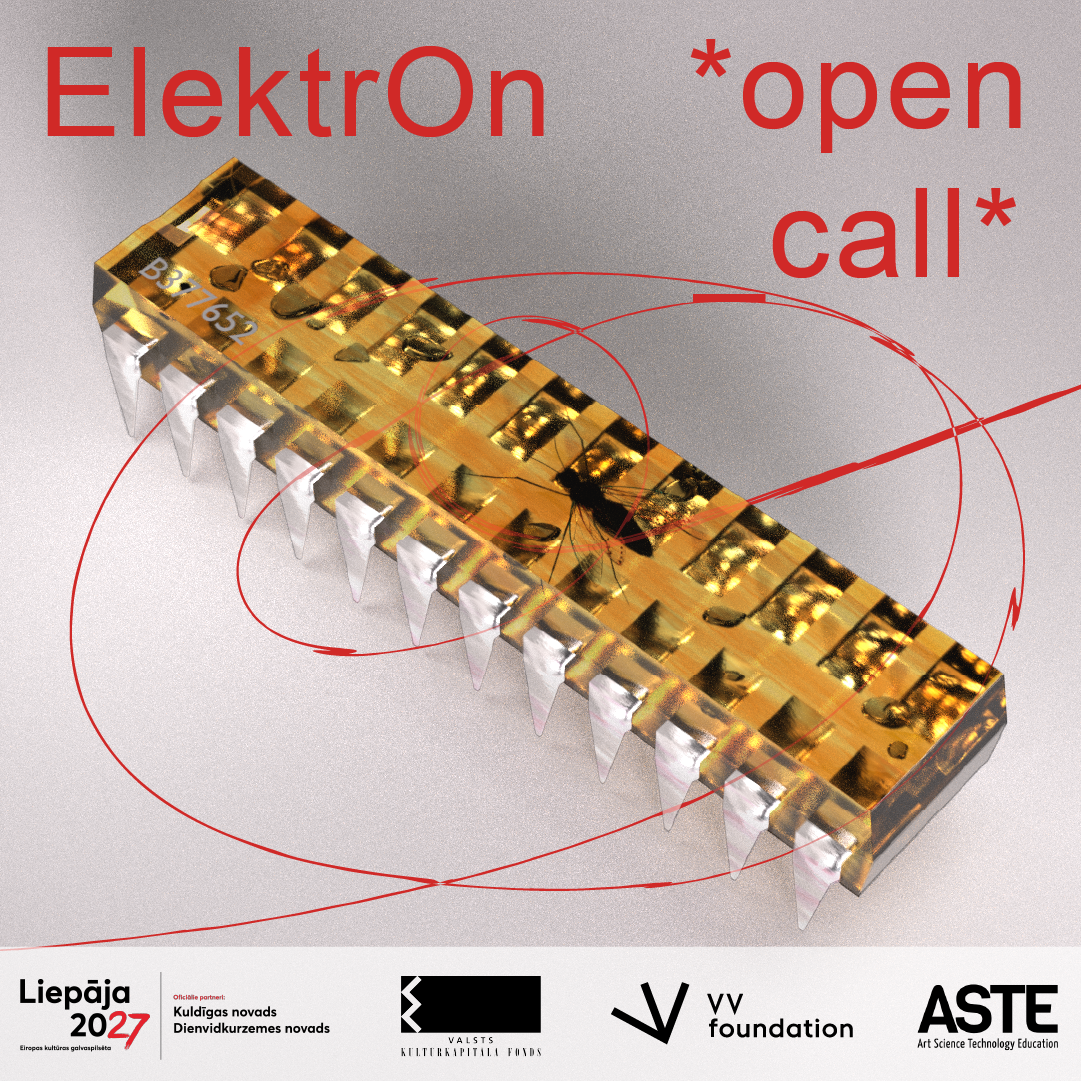
From 12 to 13 June 2026, the international symposium “ElektrON – The Future of Amber” will take place in Liepāja and Pāvilosta as part of the programme of “Liepāja – European Capital of Culture 2027”. The symposium will bring together artists, researchers, curators, and cultural historians from Latvia and abroad to collectively reflect on the significance of amber and other fossil resources in culture, economy, and human relationships with the environment. Visitors are invited to register by filling out the application form. Participation is free of charge.
The public programme of the symposium will open on 12 June at 5:00 PM in Liepāja with a lecture by German artist Lisa Rave at the Art Research Laboratory (MPLab) of the RTU Liepāja Academy, located at Kūrmājas prospekts 13, Liepāja. In her artistic practice, Lisa Rave explores the relationship between humans and geological environments, combining perspectives from art and anthropology. The lecture will be followed by a screening of her essay film “Europium” (2014). The film highlights the history of colonialism and examines how fossil resources and exploitative relationships from the past continue to shape contemporary economies and everyday objects.
On 13 June, the symposium will continue at the Pāvilosta Culture House. From 1:00 PM to 4:00 PM, a programme of lectures will explore the cultural-historical significance of amber and its potential within contemporary art and technological culture. Speakers will include artist and curator Zane Cērpiņa (Norway), professor and designer Barbara Ābele from the Art Academy of Latvia, new media artist and researcher Paula Vītola, as well as the director of the Palanga Amber Museum, Sigita Talačkiene (Lithuania), and other guests.
From 4:00 PM onwards, symposium visitors will have the opportunity to learn about the artistic concepts developed within the research processes of the PAiR residency programme as part of the project “ElektrON – The Future of Amber”. Presentations will be given by Michael Saup (Germany), Mikus Svikulis (Latvia), Ieva Viese (Latvia), Zane Zelmene (Latvia), Aistė Ambrazevičiūtė (Lithuania), Kim Hankyul (Norway), Trevor Yeung (Hong Kong), and Helen Liene Dreifelds (Canada).
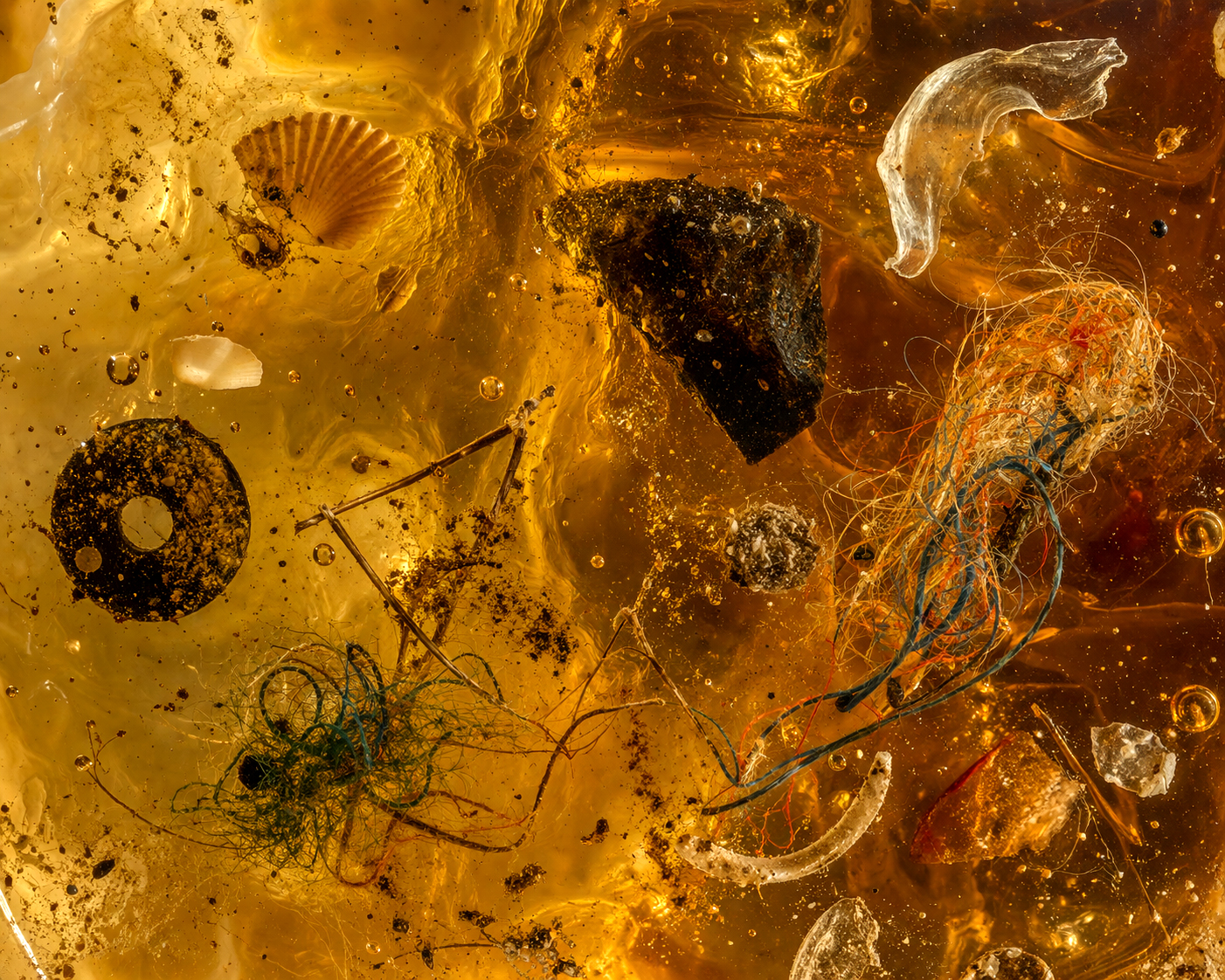
The project “ElektrON – The Future of Amber” addresses questions surrounding the depletion of fossil resources and the need to redefine humanity’s relationship with the geological structures of the Earth. Amber, much like other fossil resources, has influenced culture, trade, mythology, and scientific thought for centuries. The very concept of electricity derives from the ancient Greek word “elektron”, meaning “amber”.
The symposium forms part of the broader project “ElektrON – The Future of Amber”, which seeks to rediscover amber as a marker of Baltic Sea coastal identity while critically re-examining ideas surrounding fossil resources and their place in the contemporary world. Developed through collaboration between art and science, the project highlights amber’s cultural-historical, material, and symbolic potential in the context of the future.
The international symposium is part of a wider artistic and research process whose results will be presented in the exhibition “ElektrON – The Future of Amber” at the Liepāja Museum from 8 January to 27 June 2027, marking the opening of the “Liepāja 2027 – European Capital of Culture” programme year.
The project “ElektrON – The Future of Amber” is implemented by the association “ASTE. Art, Science, Technology, Education” in collaboration with the VV Foundation, Pāvilosta Artist Residency (PAiR). The project is realised within the framework of the “Liepāja 2027” programme with funding provided by the Ministry of Culture of Latvia, the City of Liepāja, and the municipalities of South Kurzeme and Kuldīga.
The “Liepāja 2027” programme is supported by its main partner in environmental education and sustainability, CleanR Group; its main partner in mobility and international communication, airBaltic Corporation; its legal partner, Sorainen Law Office; and its land mobility partner, Lux Express Latvia. Media partners include Latvian Public Media and Kurzemes Radio. The symposium venue support is provided by RTU Liepāja Academy.
The activities of the association “ASTE. Art, Science, Technology, Education” are supported by the State Culture Capital Foundation of Latvia.
The international open call for the project “ElektrON – The Future of Amber” has concluded, and we are pleased to announce the selected artists who will participate in the project’s activities in 2026 and 2027.
The artistic aim of the project “ElektrON – The Future of Amber” is to rediscover the lesser-known properties of amber—an emblem of identity for Liepāja and the wider “land of (un)rest”—by re-examining assumptions about this fossil resource found along the Baltic Sea coast. Bringing together artists, scientists, and historians from Latvia and abroad in an international contemporary art symposium and exhibition, the project will explore the past and present significance of amber and other fossil resources, as well as their potential for the future.
Five artists have been selected through the international open call, whose creative practices combine perspectives of nature, technology, and science:
Michael Saup (Germany)
Mikus Svikulis (Latvia)
Ieva Viese (Latvia)
Zane Zelmene (Latvia)
Aiste Ambrazeviciute (Lithuania)
The selected artists will participate in an international symposium in June 2026 on the Baltic Sea coast—in Liepāja and Pāvilosta—where, together with scientists and historians, they will reflect on the cultural imprints of amber and other fossil resources. In addition, three artists—Ieva Viese, Zane Zelmene, and Mikus Svikulis—will take part in the PAiR residency in Pāvilosta, organized in collaboration with the VV Foundation. Artists will be encouraged to seek innovative and provocative ways of interpreting and using fossil resources in a contemporary context.
The works developed through this process will be presented in the project’s final exhibition at the Liepāja Museum, on view from January 8 to June 27, 2027.
The exhibition will mark the opening of the “Liepāja 2027 – European Capital of Culture” year, offering a contemporary perspective to a wider audience on the significance of amber today and in the future.
From April 21 to 25, the “Sound Days” festival dedicated to sound art, music and experiments took place in Liepaja. Concerts, creative workshops and discussions took place throughout the week, bringing together local and foreign artists, students and other interested parties.
At the beginning of the festival, on the evening of April 21, an evening of presentations by student participants was held in the “Pegaza Pagalma” (Pegasus Courtyard). This year, the festival was attended by several dozen international participants – students from 10 foreign universities, representing countries such as Lithuania, Estonia, Finland, Poland, Germany, Italy and Denmark.
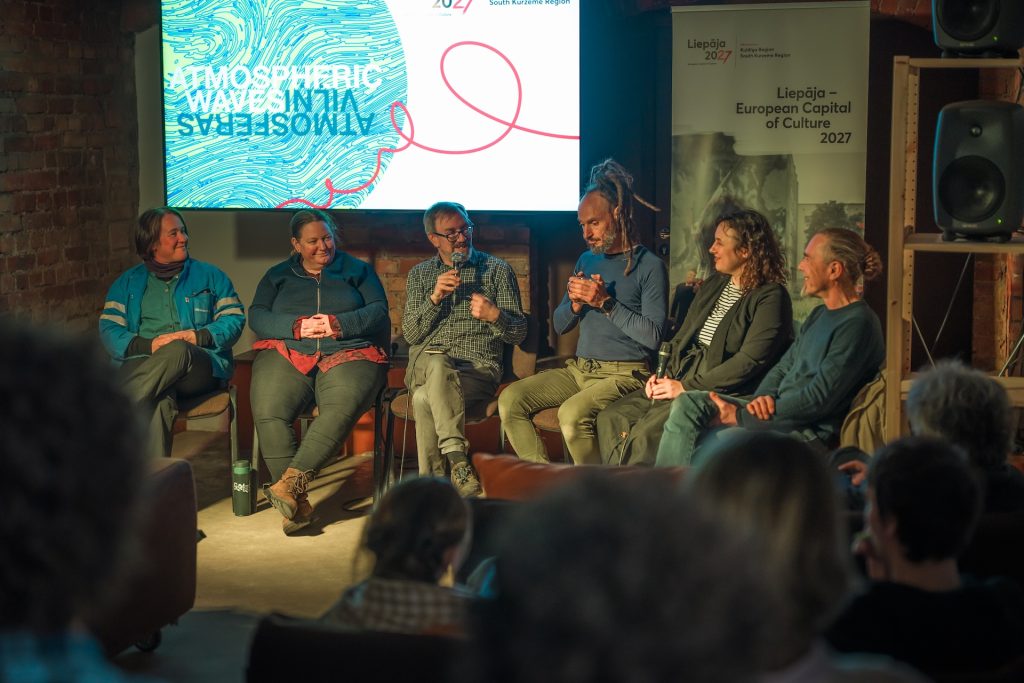
On Wednesday evening, April 22, a discussion took place at RTU Liepaja, unveiling the upcoming program “Atmospheric Waves”, which will take place in 2027 as part of the “Liepaja 2027” European Capital of Culture events, culminating in May 2027 with an exhibition of environmental objects in the urban environment, workshops, sound walks and an international symposium dedicated to wind, climate and listening practices. The program “Atmospheric Waves” will explore wind as a dynamic planetary force and source of energy that shapes the landscape, weather and human experience through sound art and listening. Liepaja, with its distinct seaside climate, will be an ideal place for a dialogue between art, science and society. The discussion focused on the interaction of art and the environment – how important it is for artists to work with the environment, study it and expand their understanding of wind and climate, as well as to look for new ways to convey these experiences to the public. The curator of the program “Atmospheric Waves” and the moderator of the discussion, John Grzinich, emphasized that working with the environment and the practice of listening can be an important tool that helps to deepen our understanding of natural processes and at the same time create a meaningful dialogue with society. “Atmospheric Waves” is implemented within the framework of the program “Liepaja 2027”, using funding allocated by the Ministry of Culture, Liepaja City, South Kurzeme and Kuldīga regions.
Discussion “Atmospheric Waves”. Participants: Kathy Hinde (UK), Marije Baalman (NL), John Grzinich (EE), Maksims Šenteļevs (LV), Krista Dintere (LV), Florian Tuercke (DE). Photo by Kārlis Volkovskis.
The central activity of the “Sound Days” festival is a diverse program of creative workshops led by internationally recognized artists, in which workshop participants made musical instruments and sound sculptures, produced music and improvised with various electronic and acoustic instruments, as well as with the help of programming, as well as explored and listened to the urban environment of Liepaja using various methods. Throughout the week, participants explored, designed, built, soldered, programmed, recorded and produced, using laboratories and classrooms in several buildings of RTU Liepaja, as well as in the prototyping space “FabLab Liepaja”, so that at the end of the week it would be possible to present unique and exciting results, which could be experienced on April 25 from 14:00 at the club “Kursa”, on the beach and elsewhere in the urban environment.
The result of the workshop by Maksims Šenteļevs and Artūrs Punte was the first to be experienced – in the foyer of the club “Kursa” an installation “habitat” was created among the plants and trees, which was rung and moved by the environmental conditions of the time – sunlight, wind strength, plant activity and other information. Then we went to the beach, where participants of the workshop by Kathy Hinde (UK) took visitors on a wind listening walk with various wind instruments. Finally, on the beach itself we were met by Marije Baalman (NL), whose participants demonstrated a special system – kites were released into the wind, and data from the kites’ flight trajectories formed the sound for the participants’ compositions.
Presentation of the results of the workshop “Sounding Dragons” by Marije Baalman (NL). Photo by Kārlis Volkovskis.
Afterwards, the audience were able to listen together to real-time sounds from various locations in Liepaja city, where John Grzinich (US/EE) tested live radio streaming systems together with the participants, as well as the field recording performance of the participants by Florian Tuercke (DE).
The resulting sound recordings can be listened to on the global field recording map Aporee.org.
Then moving to the big stage, where the participants of the music production workshop “From the Heart to the Tombs” by Artis Kuprišs and Reinis Naļivaiko united in a heartfelt performance, whose energy made the visitors and other participants dance, joining in a joint dance both in the hall and on the stage. Visitors had the opportunity to purchase the participants’ self-published CD with the compositions created in nature.
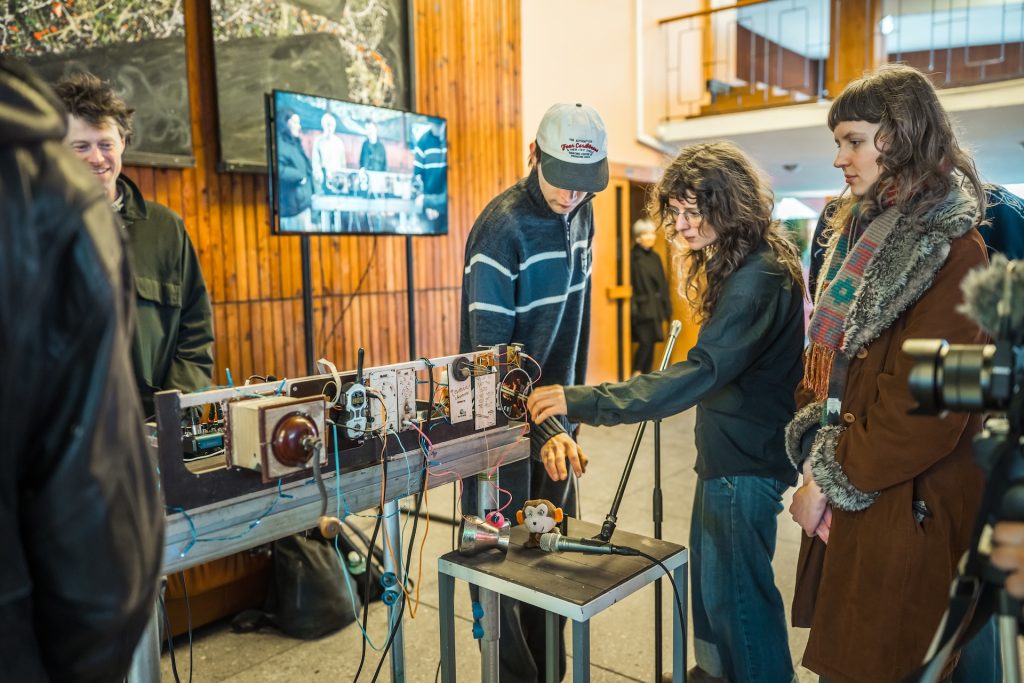
Returning to the lobby of the club “Kursa”, we experienced more performances and demonstrations. Instrument inventor Gijs Gieskes (NL) demonstrated an experimental modular synthesizer made using electromechanical tools – motors, toys and old electrical equipment. In the workshop of Monga Pribadi (ID/LT), exploring urban and personal identity, instruments were made from waste and found materials and at the end the participants agreed on a joint performance. Slightly different from all the other workshops – in the workshop of Jia Liu (DE), participants worked exclusively in a digital environment, learning live programming and an online collaboration system created by the artist, a collaborative laptop performance took place.
Presentation of the results of the workshop “DIY Eurorack modules” by Gijs Gieske (NL). Photo by Kārlis Volkovskis.
A very important event of the festival is the concert program at the club “Kursa” over several days, combining several branches of the program in genre-diverse evenings.
On the evening of April 24, the club hosted a performance evening “Otherwise. Differently.”, created in collaboration with the Lithuanian residency center “Kintai Arts”. The program featured performances by Agita Reķe (LV), Johannes Mong Santoso Pribadi, and Krisa Kuldkepp (EE), participants of the Baltic sound artist residency program “Kintai. Kitaip.” 2025. The program was supplemented by the workshop leader Florians Tuerke with a performance of “Project Longboardharp” – a self-made acoustic string instrument, as well as participants of the “Nx20” program – Diana Lelis and Sabrina (LV), Rugi (LT), Kentasso (LV), and Dafelz (LV).
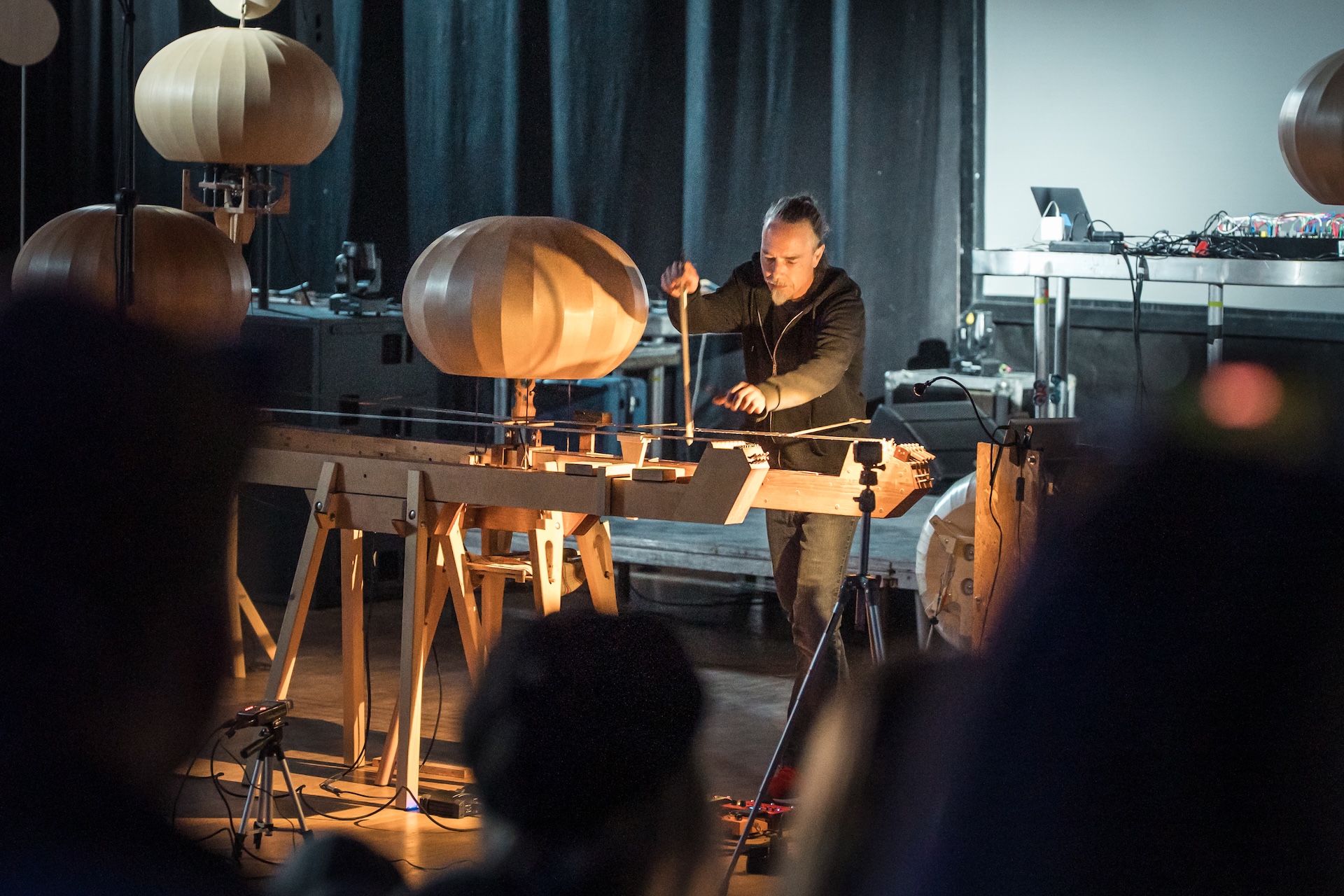
“Otherwise.Differently”. Florian Tuercke, DE – Project Longboardharp. Foto Kārlis Volkovskis
On Saturday, April 25, the festival’s closing concert took place, featuring guests of the festival, Latvian artists – composer Andris Dzenītis with the electronic music project Woodpecker öö (LV), as well as composer Ernests Valts Circenis (LV) with a performance “from the body”. The festival workshop leader Jia Liu also performed together with artist Michele Samarotto (DE) with a live programming performance, as well as workshop leaders Artis Kuprišs and Reinis Naļivaiko with a meditatitive electromechanical kokle and modular synthesizer improvisation. The program was complemented by “Nx20” members Marta Laumiņa (LV), Ignas (LT), grainn (DE), Zeegamund (LV) and Döni$ (FI). At the very end of the evening, DJ sets were played by “Kintai.Kitaip” program member and workshop leader Mo’ong Pribadi, as well as Ieva G (LV) and Omiros (LV). Part of the performances was the traditional open performance program “Nx20”, in which workshop participants have the opportunity to apply in an open call. In this way, music of a wide variety of genres and performances is represented in the international program – from experimental avant-garde or noise music to hip-hop and art-pop music performances.
“Sound Days” is organized by the association “ASTE. Art, Science, Technology, Education”, the association “E-Lab, electronic art and media center” and the RTU Liepaja Humanities and Art Sciences Center. Sound Days is held thanks to the financial support of the Liepaja City Municipality “Culture Administration” and the State Culture Capital Fund.
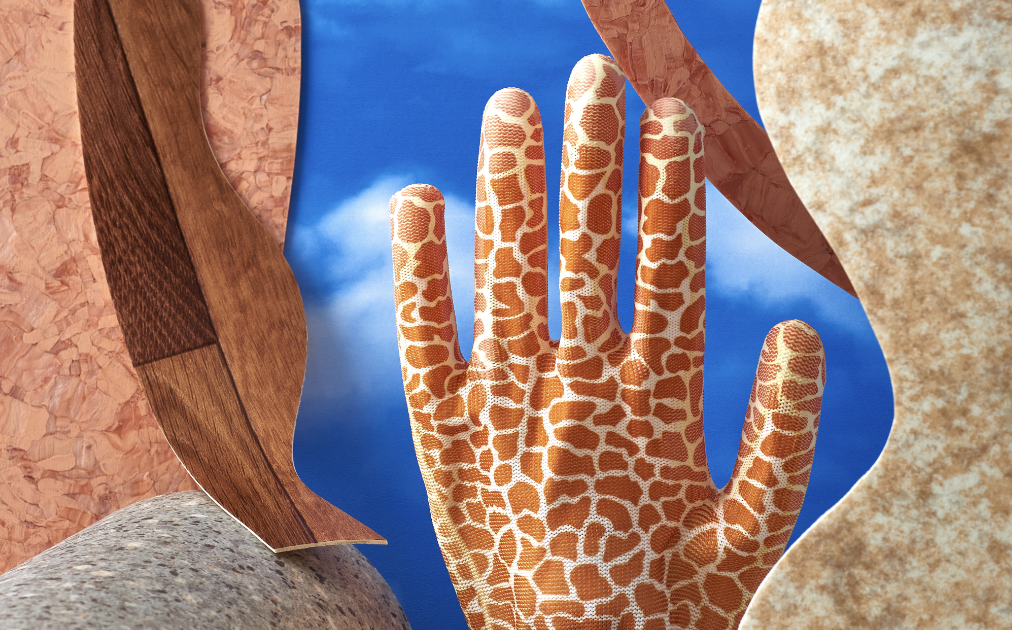
On April 24 at 16:00 (4:00 PM), the solo exhibition “Marmoleum Real 2mm” by artist Zane Priede will open at the RTU Liepāja Academy’s Center for Humanities and Arts gallery (Kūrmājas pr. 13).
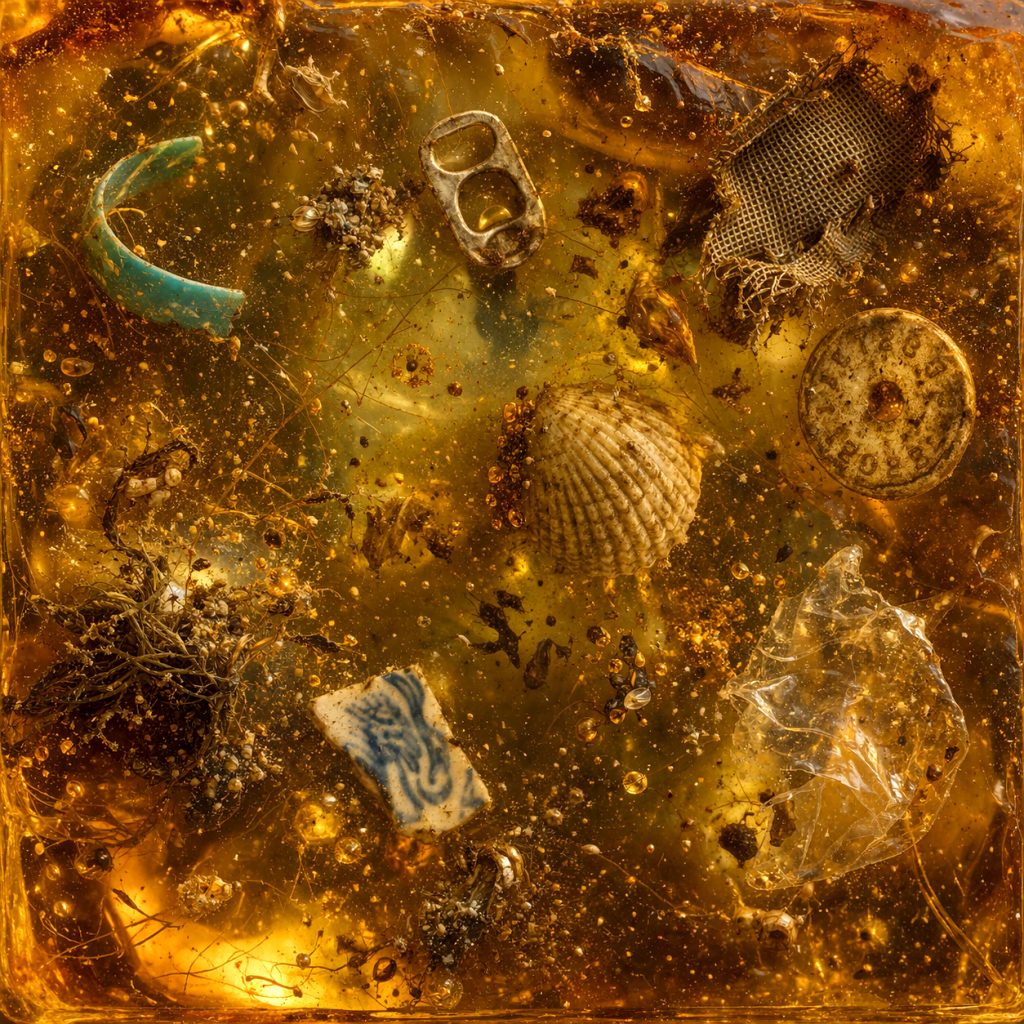
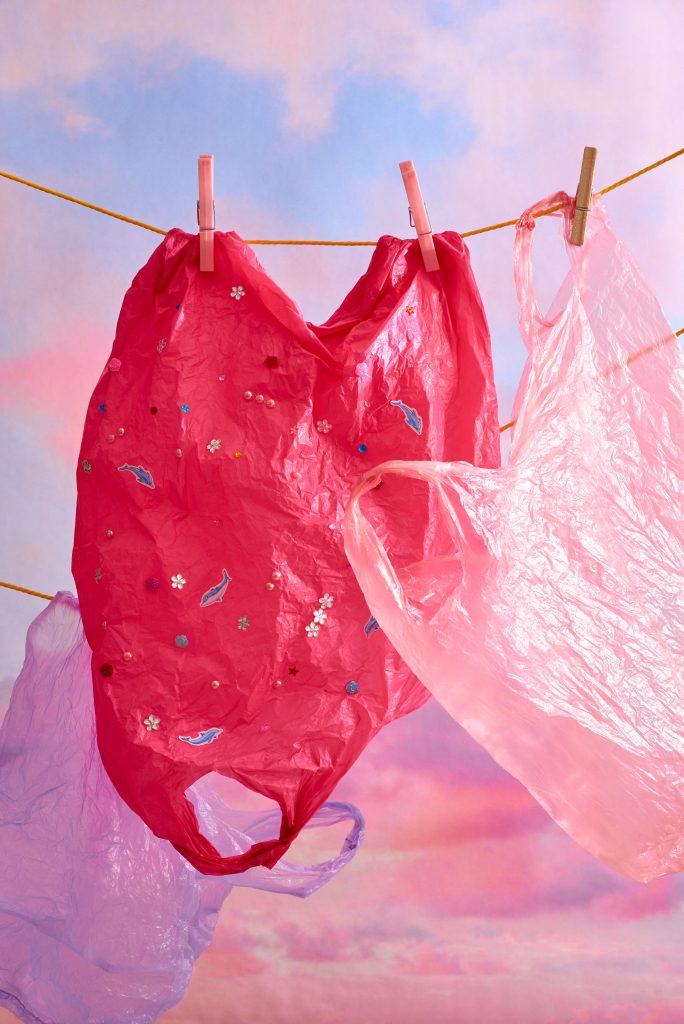
Zane Priede’s solo exhibition “Marmoleum Real 2mm” is a visual study of the aesthetics and material culture of the 1990s. Through large-format photographs and studio-created still lifes, the artist analyzes the “imitation culture” characteristic of that era, where cheap materials—such as linoleum, drywall, and plastic—attempted to replicate symbols of longed-for prosperity.
The exhibition focuses on the “autotopography” of objects—their ability to store emotional memories and shape our collective identity. These vibrant works reflect on the transition from Soviet grayness to capitalist consumer culture, searching for footprints of the past and nostalgia within the scenography of modern everyday life.
About the Artist: Zane Priede (b. 1990) is a professional photographer whose works feature imagined and surreal scenes using everyday objects. She is a graduate of the Design Academy Eindhoven in the Netherlands. Zane’s deep passion for architecture and design is evident in her visual approach, which involves constructing scenes with small-scale objects. Her interest in science, biology, and psychology is focused within her visual research, offering a playful approach to storytelling and revealing the fantastic within the mundane. In 2023, Zane was nominated for the European photography platform “Futures.”
Visitor Information
Admission: Free of charge
Hours: Weekdays from 12:00–19:00 (12:00 PM – 7:00 PM)
Location: gallery on the 2nd floor of the building
Duration: Until May 22
Organized by: The association ASTE (Art, Science, Technology, Education) in cooperation with RTU Liepāja Academy.
Supported by: The State Culture Capital Foundation and the Liepāja Culture Department.
The artistic objective of the project “ElektrON – the Future of Amber” is to rediscover the lesser-known properties of amber—the symbolic identity marker of Liepāja and the entire “land of (un)rest”—by re-evaluating assumptions regarding this fossil resource found along the Baltic Sea coast. Through an international contemporary art residency, symposium, and exhibition, we will bring together artists and researchers from Latvia and abroad to reflect on its past and present significance, as well as its future potential, within a symbiosis of art and science.
Amber—much like other fossil resources—holds deep significance not only in Latvian culture but also in the cultures of many other nations: it is intertwined with various myths, beliefs, social structures, and international trade routes. It has inspired both artists and scientists alike; in fact, the phenomenon of electricity derives its name from the Ancient Greek word elektron, meaning “amber,” as the Greeks observed amber’s electrostatic properties—or “action at a distance”—as early as the end of the 7th century BCE. However, as these and other fossil resources are gradually depleted by human economic activity, we must redefine their significance and seek ways to minimize our interference and the restructuring of the Earth’s geological formations.
Through the international open call for the “ElektrON – Amber’s Future” project, five artists will be selected who integrate technology and scientific insights into their creative practice. In collaboration with researchers and historians at an international symposium in June 2026 on the shores of the Baltic Sea—in Liepāja and Pāvilosta—they will deliberate on the cultural footprint of amber and other fossil resources.
During creative residencies organized in cooperation with the “VV Foundation,” artists are invited to seek innovative and provocative ways to utilize and represent fossil resources today. Their insights will be integrated into artworks to be featured in the project’s final exhibition at the Liepāja Museum from January 8 to June 27, 2027. This exhibition will showcase “Liepāja 2027—the European Capital of Culture”—as a crossroads for the interaction between nature and technology.
Curator: Anna Priedola
Project Manager: Sabīne Jermaloviča
Visual Identity: Andrejs Poikāns
Here is the English translation of the eligibility and conditions sections for the open call.
ELIGIBILITY: WHO CAN APPLY?
Artists exploring technology and/or science in their creative practice
Artists residing in Latvia or Europe.
Artists with at least 3 years of professional experience, as reflected in the portfolio attached to the application.
Availability to participate in the symposium during the period of June 12–14 in Pāvilosta (Latvia)
TERMS AND SELECTION
The symposium and exhibition organizers, the association “ASTE. Art, Science, Technology, Education,” will provide:
Accommodation and living costs during the symposium (June 12–14) in Pāvilosta and Liepāja (Latvia).
Travel expenses to Liepāja/Pāvilosta and back to the country of residence (up to 400 EUR).
1–3 week stay in Liepaja/Pāvilosta during Summer 2026 in accordance to the aggreement between artist and organiser
Artist Fee:1,500 EUR (gross) (1,000 EUR for the residency and symposium / 500 EUR for the exhibition).
Production Costs: Coverage for the creation of a new artwork up to 1,000 EUR.
Travel and accommodation for the exhibition opening event on January 8, 2027.
Artist Selection:
The association ASTE will select 5 artists through this international open call. The jury—composed of representatives from ASTE, the “VV Foundation,” and the “Foundation 2027”—will choose the most conceptually relevant and technically/thematically innovative proposals for artworks and research, also taking into account the artists’ previous creative portfolios. Results will be announced via email by 30.04.2026
The project “ElektrON – the Future of Amber” is being implemented within the framework of the program “Liepāja 2027”, using the funding allocated by the Ministry of Culture, Liepāja City, South Kurzeme and Kuldīga regions. The “Liepāja 2027” program is supported by the main partner in the field of environmental education and sustainability AS “CleanR Grupa”, the main partner in the field of mobility and international communication AS “airBaltic Corporation”, the mobility partner – transport carrier SIA “Lux Express Latvia”. The activities of the association “ASTE. Art, Science, Technology, Education” are supported by the State Culture Capital Fund.
On Thursday, February 5, at 17:00, the exhibition “Blue Shift” will open in the exhibition hall of the Liepāja Music, Art, and Design Secondary School at 18 Alejas Street. It will feature various visual and interactive artworks, as well as augmented reality experiences. The exhibition will be open from February 5 to February 26 on weekdays from 12:00 to 19:00.
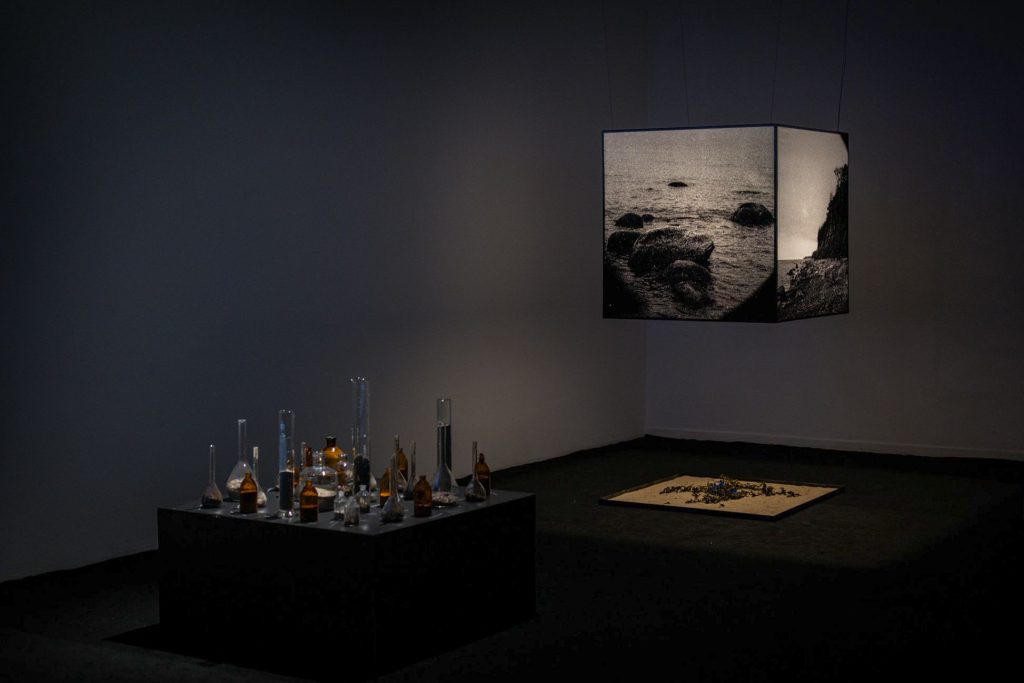
The title of the exhibition, “Blue Shift,” is borrowed from the astronomical concept describing a spectral shift toward the blue end of the spectrum, indicating movement, approach, and increasing energy. In this exhibition, “blue shift” becomes a metaphor for changes in our perception and relationships with marine and water ecologies, technology, and human presence in environmental processes.
The works in the exhibition focus on the sea as a sensitive, changing, and significant environment—Baltic Sea ecology, water pollution, climate change, the human footprint, and the role of technology in perceiving and interpreting these processes. Artists use digital media, interactive installations, and various visual forms to invite the viewer to pay attention to processes that often remain invisible or abstract in daily life.
The exhibition encourages thinking about the significance of “blue” space not only as a natural resource but also as a field of culture, memory, and responsibility, where human actions and choices become part of broader ecological and social processes.
Artists in the exhibition: Arūnė Baronaitė (LT), Diana Lelis, Līga Vēliņa, Rebeka Lasmane, Maija Demitere, Marta Zomerovska, Zane Zelmene, Ivo Tauriņš, Jekaterina Jevdokimova, Madara Kronberga, and others.
As part of the exhibition, new augmented reality works will be launched in the ART+ mobile app. These augmented reality artworks will be viewable in various locations throughout the city of Liepāja. To view the works, a smartphone or tablet with GPS and an internet connection is required; users must download or update the ART+ app and go to the specific location of the artwork. Currently, 50 augmented reality artworks are already viewable in Liepāja.
The exhibition was created as part of the Media Art and Technology Festival “UPDATE,” which annually offers a program for young artists and art students, especially those who have chosen digital technologies as their creative tool. Within the framework of “UPDATE: Blue Shift,” participants took part in workshops, masterclasses, boat trips at sea and on the lake, as well as a hike along the Liepāja beach to study the presence of microplastics in the coastal environment.
During the festival program, artists created works reflecting on the human role in water ecologies and the significance of water ecologies in the urban environment of Liepāja, combining observations, artistic research, and technological solutions.
Exhibition opening: Thursday, February 5, at 17:00.
The exhibition is open from February 5 to February 26, on weekdays from 12:00 to 19:00.